
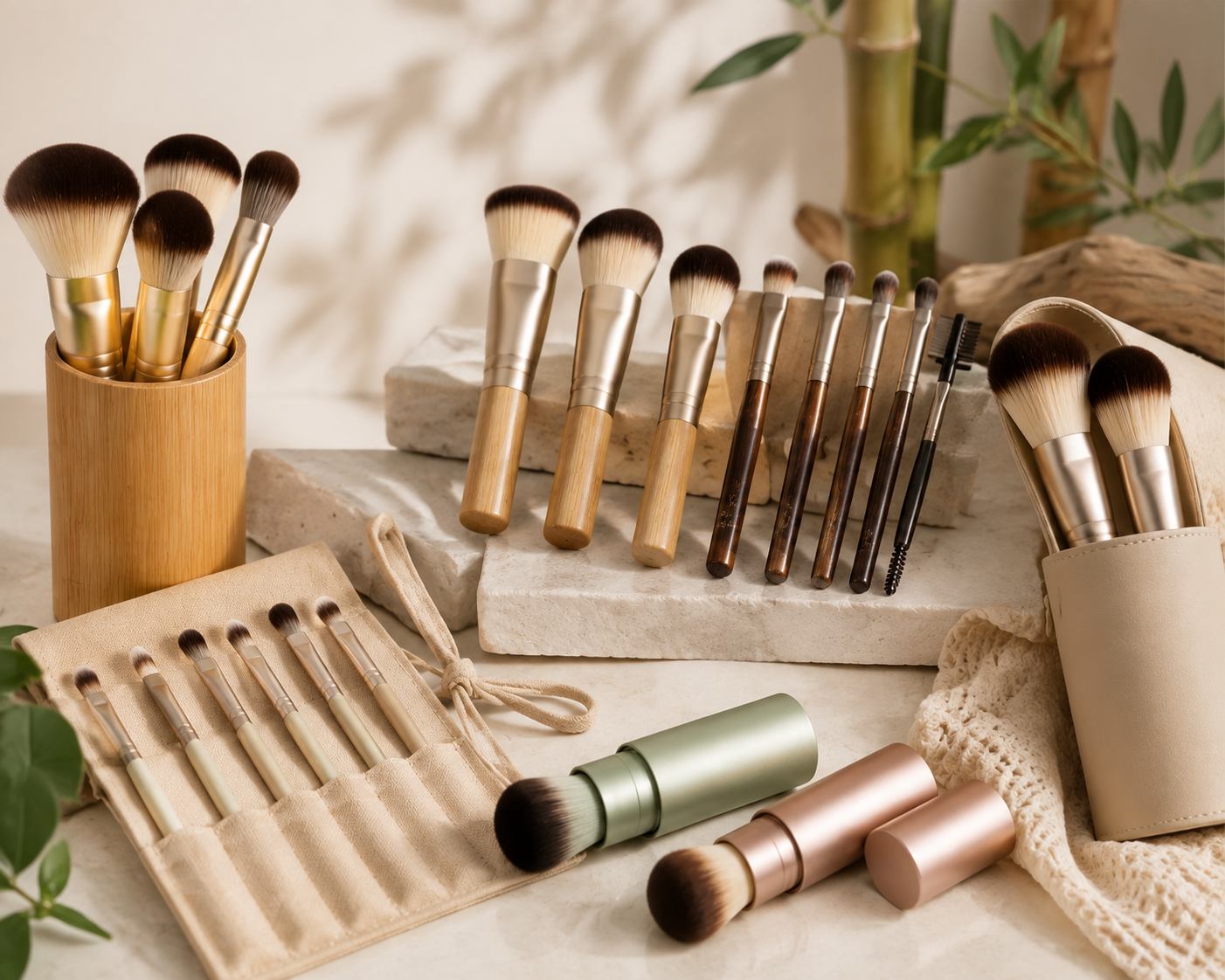

2026 / 09 / 24
Wholesale Eyeshadow Brushes: How to Build a High-Performance Eye Makeup Line for Retail and Private Label Brands
Selection of eyeshadow brushes for wholesale should be based on functionality, formulation, usage habits, and sales route rather than on aesthetics or quantity. A good business-to-business collection differentiates between blending, placement, detailing, and multi-purpose functions and matches each one with the right brush form, synthetic fiber, handle, ferrule, and packaging in accordance with its market positioning.
ZOREYA gives beauty brands a practical base for building that kind of focused eye makeup assortment.
Why Wholesale Eyeshadow Brushes Need a Role-Based Strategy
Retail buyers and private label teams often face the same problem: too many similar brushes make a set look full, but they do not necessarily make it more useful. An eye makeup range becomes easier to position when every brush has a clear job, and the product page can explain that job in one sentence.
The commercial value is also easier to see. A compact set can support everyday eye looks, a larger assortment can serve professional users, and a dual-ended tool can add a premium feature without filling the package with repetitive shapes. This gives a brand room to create entry, core, and premium tiers while keeping the collection coherent.
Match Brush Shapes to Eye Makeup Tasks
Use blending brushes for controlled transitions
A blending brush needs enough softness to move powder across the crease without creating a hard edge. A fuller rounded head can support broad transitions, while a smaller tapered head can keep color closer to the socket or outer corner. For wholesale eyeshadow brushes, the key decision is not simply whether the fibers feel soft; it is whether the shape gives the user predictable movement.
ZOREYA’s high-resilience synthetic fibers can be shaped for different levels of fullness and control. That makes them useful for brands that want a consistent material story across a collection while assigning different application roles to face, eye, and detail brushes.
Use shader and detail brushes for placement
Flat or compact shader heads are easier to position on the lid when a formula needs more concentrated placement. Small detail brushes can support inner-corner highlighting, lower-lash work, brow definition, or precise concealing around the eye. A practical eye makeup brush set should show this progression clearly instead of grouping several brushes that perform almost the same motion.
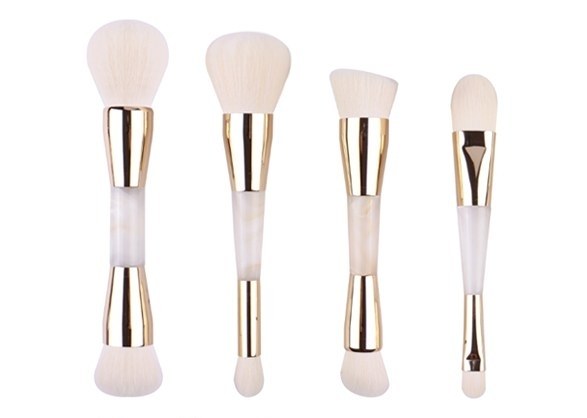
A dual-ended format can be effective when the two ends have complementary functions, such as a blending head paired with a smaller detail head. ZOREYA’s dual-ended designs are described for applications including eyeshadow blending, targeted highlighting, concealing, contouring, and lip-line detail, which makes the format relevant to compact retail and professional touch-up products.
Choose Materials for Consistent Eye Makeup Performance

Synthetic fibers support repeatable product development
Synthetic eye makeup brushes are often a practical choice for B2B ranges because the fiber can be shaped, combined, and specified around the intended formula. Powder eyeshadow, cream color, shimmer, and concealer each place different demands on pickup, release, flexibility, and cleaning. The right brief should describe the makeup behavior first, then decide the brush construction that supports it.
ZOREYA offers synthetic fiber directions with soft, elastic, washable, and anti-shedding characteristics, while some designs use an oleophobic and hydrophobic treatment to make residue easier to rinse away. These points should become care instructions and product claims only after the final sample has been checked with the actual formulas and cleaning routine.
Let the ferrule and handle support daily use
Eye brushes are small, but the connection between the bristle bundle and handle still affects balance, comfort, and perceived quality. A narrow detail brush may feel unstable if the handle is too light, while a dense blending brush can feel tiring if the center of gravity is poorly controlled. Ferrule finish and handle color also influence whether the product reads as professional, trend-led, or gift-ready on a retail shelf.
ZOREYA’s range includes metal ferrules, wood handles, ABS options, and multiple surface finishes. Brands can use those choices to keep a family resemblance across several brush shapes without forcing every item into the same price or visual tier.
Build a Wholesale Eyeshadow Brush Assortment
Create an accessible entry set
An entry set should cover the most recognizable eye steps: one blending brush, one placement brush, one smaller detail brush, and any additional tool that clearly earns its space. This structure is easy to explain in a product listing and works well for boutiques, gift collections, starter makeup lines, and social commerce.
The set should still feel complete when it is small. A coherent handle color, ferrule finish, and bristle appearance can make a focused range look intentional, while a simple pouch or gift box can help the product fit a particular shelf and price position.
Build a professional tier around coverage
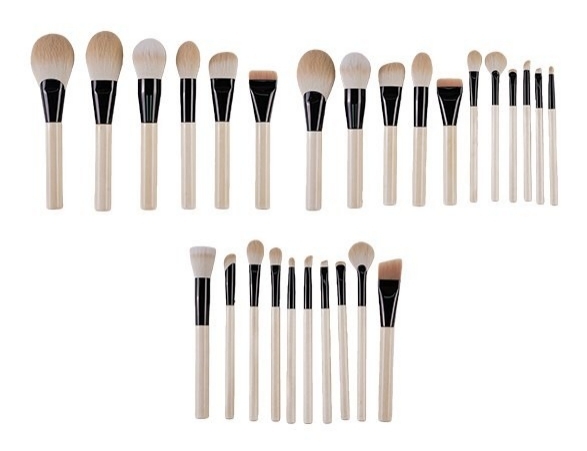
The wider choice in eyes would enable distinction between placement, blending, smudging, lining, brow, and precision tasks. Also, eye brushes may be combined with the facial applicators chosen from the line, if the aim is to sell an entire regimen of makeup application rather than a category alone. The idea is not to include the maximum amount of items but to create distinctiveness in the usage of every brush.
In the professional environment, brushes need to be washable, easily reshaped, kept together, and identified. Packaging may help with this process by ensuring protection of the brushes’ heads and clarity of their functions without too much text.
Use customization to create a recognizable line
Private label teams can differentiate a wholesale eyeshadow brush program through brush-head combinations, bristle color, handle material, ferrule finish, logo treatment, and packaging. The strongest results come from making those decisions together. A trend color cannot compensate for unclear brush roles, and a beautiful handle cannot solve a mismatch between the head shape and the formula.
How ZOREYA Fits B2B Eye Makeup Programs
ZOREYA is well-suited when there is a need for a brand to shift from a concept of an eye brush into a product family. The following directions have been given: synthetic fiber brushes, dual-ended brushes, professional brush sets, handmade brushes with wooden handles, and custom packaging. This diversity will allow a retailer or a private label brand to create a ladder starting from affordable daily items up to unique professional or gifting brushes. It is necessary to outline in the development brief the target formulas, application procedures, cleaning process, retail environment, and the positioning of the line.
From there, ZOREYA can coordinate brush shape, material combination, handle treatment, logo application, set configuration, and packaging around the same product logic.
Conclusion
The best wholesale eyeshadow brushes are not chosen by piece count alone. They are built around clear application roles, controlled brush shapes, suitable synthetic fibers, comfortable construction, and a retail story that customers can understand quickly. With its range of eye-focused, dual-ended, synthetic, wood-handle, and customizable brush directions, ZOREYA can help B2B brands turn those decisions into a more useful and recognizable eye makeup line.
Explore ZOREYA’s product range to plan an eyeshadow brush assortment that fits your formulas, channel, and brand position.
FAQ
Q: How should a beauty brand choose wholesale eyeshadow brushes?
A: Start with the makeup steps the range must support, then match blending, placement, detail, and multi-use functions to the target formulas and customer routine. Review head shape, density, flexibility, handle balance, cleaning, packaging, and shelf position together so the assortment remains easy to use and easy to explain.
Q: Are synthetic eye makeup brushes suitable for powder eyeshadow?
A: Yes. Synthetic fibers can be shaped for different levels of softness, density, pickup, and control, making them suitable for many powder eye applications. The final brush should still be validated with the intended eyeshadow texture, pressure, blending method, and cleaning routine before performance claims are finalized.
Q: When does a dual-ended eye brush make sense?
A: A dual-ended brush is useful when both ends have clearly different but complementary roles, such as blending and detail work. It can reduce package bulk and create a memorable product feature. The handle must remain balanced, and both heads need protection during storage and transport.
Q: Can ZOREYA support a custom eyeshadow brush line?
A: ZOREYA can support customization across brush-head shape, synthetic fiber direction, handle material, ferrule finish, color, logo treatment, set configuration, and packaging. The most effective brief begins with the target formula, customer, channel, and product tier, then uses those options to create a consistent range.
Related News