2026 / 08 / 14
OEM Makeup Brushes: Dual-Ended Design Guide for Beauty Brands
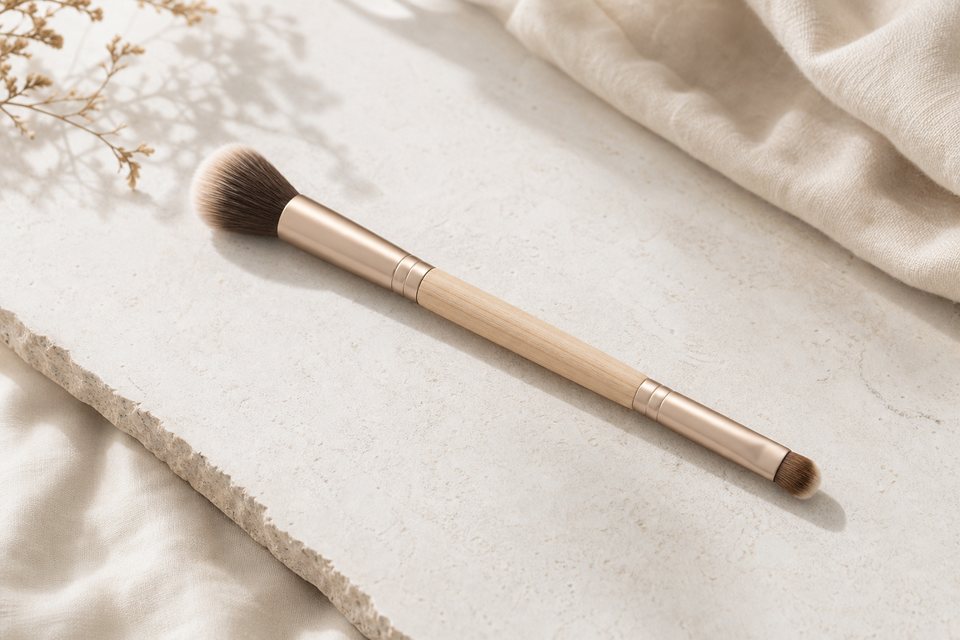
Dual-ended OEM makeup brushes combine two complementary application functions in one compact product. The strongest designs do more than save space: they create a clear, memorable use experience while helping beauty brands shape a focused brush line with fewer repetitive tools. Success depends on matching the two brush heads, balancing the handle, protecting both ends, and refining performance through a product-specific sample.
Why Dual-Ended OEM Makeup Brushes Attract Beauty Brands
A conventional brush set often contains several tools with overlapping roles. A dual-ended format can pair functions that users naturally perform in sequence, such as blending and precision shading or contouring and highlighting. This makes the product easier to explain on an ecommerce page and more practical for travel, touch-ups, subscription boxes, and curated retail sets.
The format also creates visible differentiation without relying on a decorative finish alone. Two distinct head shapes immediately communicate versatility, while coordinated bristles, ferrules, handle colors, and packaging create a coherent product story. A second head should always serve a clear purpose rather than exist simply as an extra feature.
More Functions Without Expanding the Set
A carefully planned dual-ended brush can replace two single-purpose items, but the value depends on the target routine. An eye product may combine a soft blending head with a smaller detail head, while a complexion tool may pair a broader application shape with a controlled contour or concealer end. The combination should reflect how the intended customer actually applies makeup.
A Stronger Product Identity
How to Select the Right Brush-Head Combination
The design process begins with formulas and application steps rather than appearance alone. Powder products usually need shapes and fiber arrangements that support controlled pickup and diffusion, while liquid and cream products often call for a denser structure and precise skin contact. Each end should be defined by its formula, application area, coverage, and intended finish.
Pair Complementary Makeup Functions
Useful pairings reduce interruptions in a routine. A blending head and precision shader can support an eye look, while a foundation or concealer pairing can move from broad coverage to local correction. Both ends should feel equally purposeful; a weak secondary function can make the product seem like a novelty instead of a reliable tool.
Match Fibers to the Intended Formula
Synthetic fibers are a practical option for many OEM makeup brushes because their color, softness, density, and shape can be adjusted for different product positions. However, the word “synthetic” does not guarantee identical performance across fibers. A sample review should examine pickup, release, blending control, skin feel after repeated strokes, and the shape of the head after cleaning.
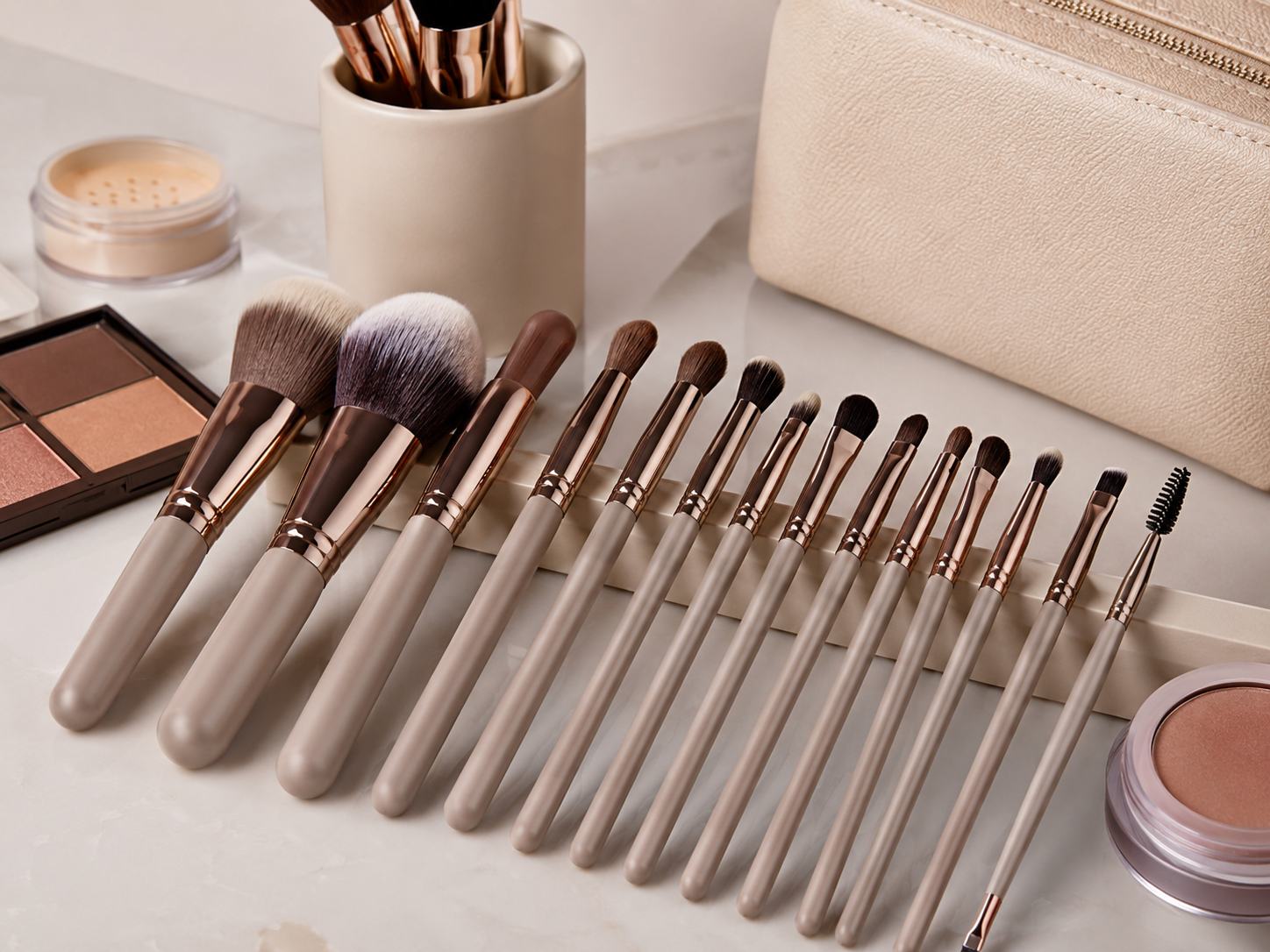
ZOREYA products show how synthetic fibers can be combined with customized brush shapes, ferrule finishes, handle coatings, and packaging. The angled makeup brush set illustrates how head geometry can give a collection a distinct visual and functional direction.
Structural Design in Dual-Ended Brushes
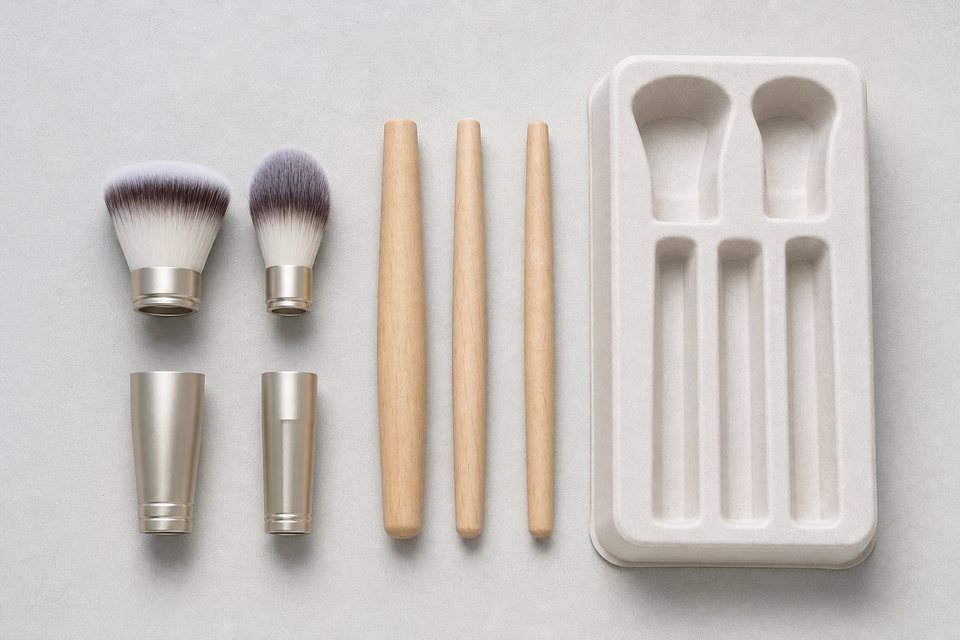
A dual-ended structure changes the way a brush is held, stored, cleaned, and shipped. The handle must provide enough central grip space without becoming excessively long or heavy. Both ferrules should align with the handle, and neither end should rotate, loosen, or create an uncomfortable weight bias during use.
Balance, Grip, and Ferrule Security
During sample refinement, the brush should be held at the positions users are likely to choose for both ends. Fingers should not crowd a ferrule, the opposite head should not obstruct movement, and detailed work should remain controlled. Ferrule edges, surface consistency, head symmetry, and both handle connections also shape the final impression of quality.
Cleaning and Storage Considerations
Dual-ended tools cannot stand upright in the same way as many single-ended brushes, so horizontal drying and storage instructions may be appropriate. Packaging must avoid compressing either head, and removable sleeves or a fitted insert can protect the shapes. Any cleaning or disinfecting claim should be confirmed against the chosen bristle, coating, adhesive, and handle materials.
Customization Options for a Distinct Product Line
Once performance is defined, the brand can specify colors, fiber gradients, handle materials, ferrule finishes, and logo placement. Project and website materials support options such as wooden or ABS handles, synthetic fibers, metal ferrules, silk-screen printing, UV printing, and hot stamping. Availability should be confirmed for the exact construction because not every process suits every surface.
Materials, Colors, and Logo Processes
A premium visual direction may use coordinated neutral fibers and metallic ferrules, while a trend-led collection may use stronger contrast. The finish still needs to withstand normal handling and packaging contact. A decorated sample reveals alignment, color consistency, edge clarity, and adhesion more accurately than a digital rendering.
Packaging That Protects Both Brush Heads
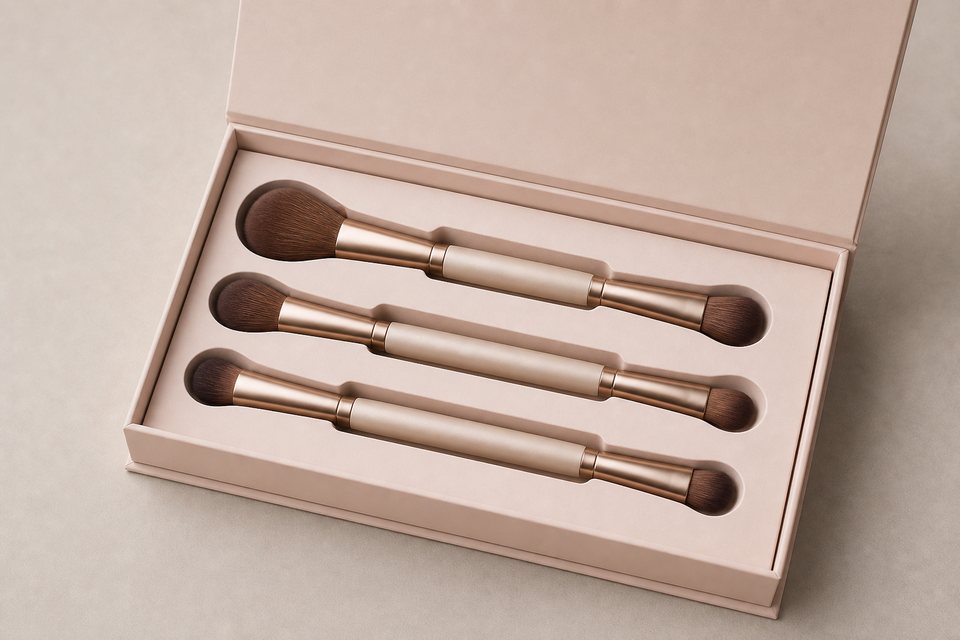
A standard narrow sleeve may bend one end or allow the brush to slide. A fitted paperboard insert, protective caps, a pouch with enough internal clearance, or a rigid gift box can provide better protection depending on the channel. Packaging approval should consider retail display, ecommerce fulfillment, opening experience, and the ability to remove the product without pulling the bristles.
How Product Concepts Become Finished Brush Designs
A successful product concept separates essential performance from optional aesthetics. Each end begins with a makeup area, formula type, head shape, firmness target, and expected finish. Handle proportions, ferrule appearance, logo treatment, packaging style, and the visual character of the collection can then develop around that functional foundation.
Refining the Complete Product Sample
Review the sample as a complete system. Test both heads with the intended formulas, compare balance from each grip direction, wash the brush using the planned care method, and recheck shape and connections after drying. The approved sample, material specification, color reference, artwork, and packaging layout should form the basis of the production confirmation.
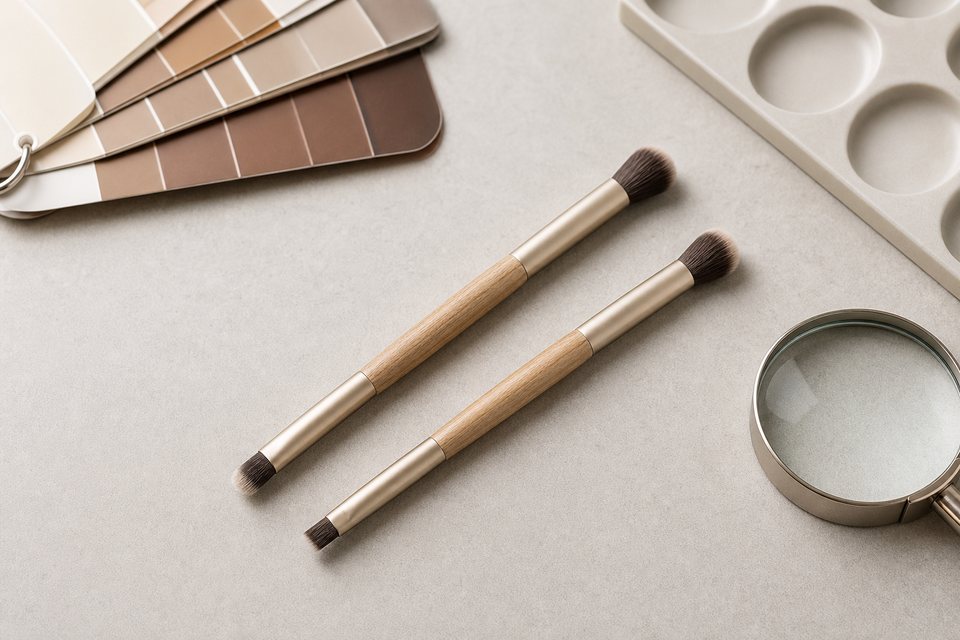
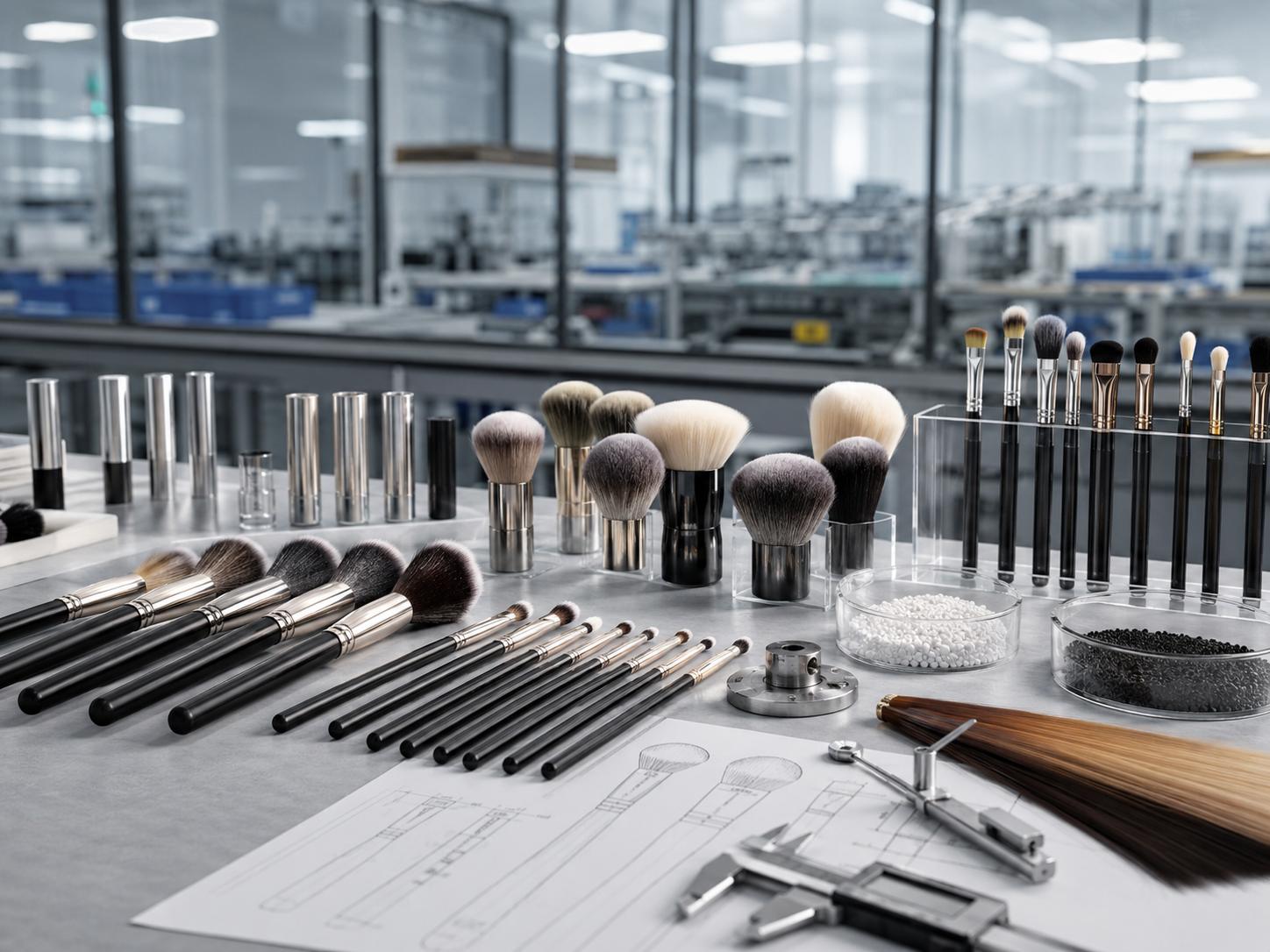
Materials, decoration, packaging, and tooling all influence how a concept moves from an early sample to a finished collection. ZOREYA develops products from concepts, samples, and drawings through its OEM makeup brush development capabilities, allowing structure, appearance, and packaging to evolve as one design.
How ZOREYA Supports Product Development
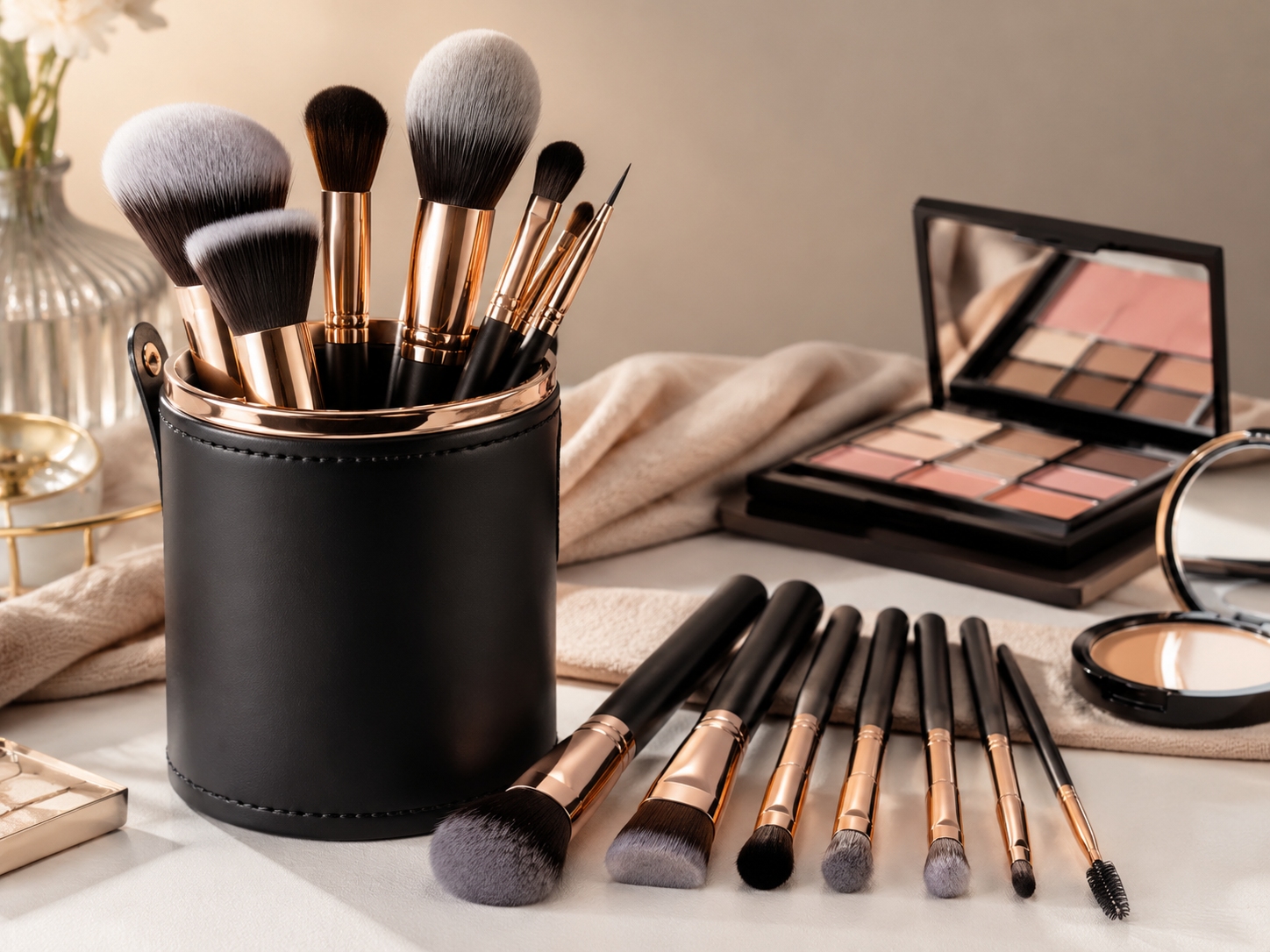
ZOREYA can support customization across brush-head shape, fiber selection, handle appearance, ferrule finish, logo application, set composition, and packaging. In dual-ended projects, these elements connect a functional pairing with a coordinated retail identity. Its current makeup brush collections also show how different materials and visual styles can shape a wider product family.
Conclusion
Dual-ended OEM makeup brushes can help beauty brands create a compact, recognizable, and commercially focused product line. Their value comes from pairing genuinely complementary functions, engineering a balanced structure, and protecting both brush heads through cleaning, storage, and distribution. With thoughtful sampling and coordinated design development, the format can become a useful hero product rather than an unnecessary feature.
Discover how ZOREYA turns dual-ended brush concepts into coordinated product designs.
FAQ
Q: What functions can be combined in dual-ended OEM makeup brushes?
A:Common combinations include blending with precision shading, foundation with concealer, or contouring with highlighting. The best pairing follows two steps that people naturally perform together. Both heads should work comfortably with their intended formulas, and neither end should add bulk without delivering a meaningful application benefit.
Q: Which bristle materials are suitable for a dual-ended makeup brush?
A: Synthetic fibers can be adjusted for different shapes, densities, softness levels, and color effects, making them suitable for many customized designs. Material selection should follow the formula and desired application result. Pickup, release, blending control, skin feel, cleaning behavior, and shape recovery all contribute to the finished brush experience.
Q: What should brands evaluate when refining a dual-ended brush sample?
A: Inspect the function of both heads, handle balance in both directions, grip comfort, ferrule alignment, connection security, surface finish, logo accuracy, and packaging clearance. Test the brush with its intended makeup formulas, clean it according to the planned care instructions, let it dry horizontally, and then check the head shapes and assembly again.
Q: Can ZOREYA customize the brush heads, colors, logo, and packaging?
A: ZOREYA supports OEM/ODM customization that can include brush-head shapes, fiber choices and colors, handle finishes, ferrule treatments, logo application, set composition, and packaging. The final combination depends on the selected construction and decoration, so each element should be developed and evaluated as part of one coordinated product concept.
Related News