
2026 / 10 / 15
Foundation Brush Types: How Beauty Brands Match Shape, Density, and Formula
Foundation Brush Types: How Beauty Brands Match Shape, Density, and Formula
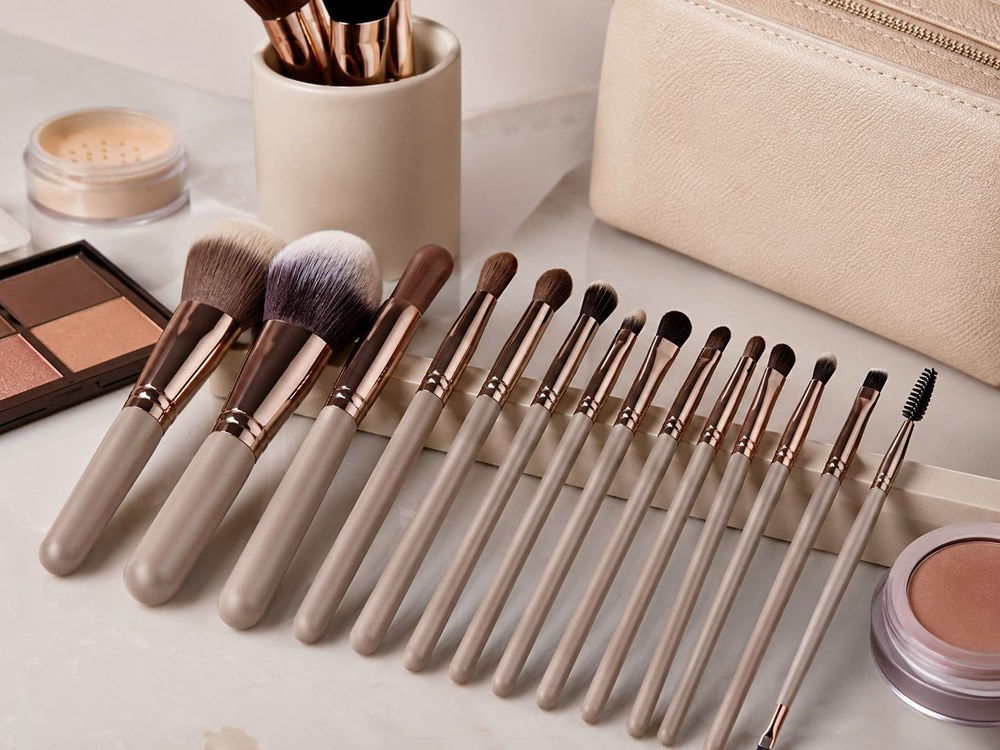
The best foundation brush for a given product depends on the product formula, the surface area to be covered and the finish that customers expect. A flat top dense brush is ideal for quick spreading of liquid foundations while an angled head allows for easy application to the hard to reach areas of the nose and jaw line. A round or kabuki shaped brush is perfect for buffing products for an even smoother finish. When selecting a foundation brush range for your beauty brand, make sure the brush geometry is explained in order to avoid confusion between seemingly similar brushes. Z’OREYA develops and manufactures synthetic and natural hair brushes of high quality. We can create full-face brush sets as well as individual professional brushes.
What Makes a Foundation Brush Perform Differently
Head shape controls reach and blending pattern
The shape of the foundation brush impacts the way the makeup moves on the skin. A wide, flat shape works well for large surfaces; an angle can trace the sides of the nose and cheeks; a round one is suitable for circular motions. Shape alters the control over contour lines and description of the brush set to the customer.
Fiber density changes coverage and finish
Densely-packed brushes have a larger product load at the surface level and allow creating a more opaque look without numerous strokes. The more soft and flexible construction allows to soften the line and to create a more subtle effect. The decision about the type of brush depends on the type of the product and the desired result, therefore, the test sample must be applied with the same formula as the final collection.
Z’OREYA utilizes Nylon/PBT fibers and other types of synthetic fibers along with natural hair fibers, depending on the concepts required. Fiber softness, fiber elasticity, color, and head shape can all be developed simultaneously instead of being considered separate specifications.
Handle balance affects application control
For use as a foundation applicator, the brush must be able to move in certain areas such as the nose, hairline and jaw line. A short handle can be uncomfortable to use and cause the user’s hands to cramp up. Other factors that affect use of the brush are the surface it is being used on, the position of the ferrule and the transition from handle to tube.
Foundation Brush Types for Different Formulas
Flat-top and dense brushes for liquid foundation
A flat-top foundation brush gives a clear edge for spreading and pressing liquid product. It is useful for brands that want to communicate buildable coverage and a fast full-face routine. The head should be dense enough to distribute product evenly without leaving visible lines, while the perimeter should soften into the skin rather than create a hard border.This format is a strong item when the range needs one easy-to-understand complexion tool.
Angled brushes for targeted coverage
An angled head can offer better access to areas such as the sides of the nose, the inner cheeks and jawline. An angled head can also be used by a brand to show how to use the brush for more detailed work such as sculpting, or for more precise correction depending on the tool’s density and size. The angle of the head should support the way the user intends to use the brush and an extremely angled head may look great but feel useless if the contact area is too small.
Rounded and kabuki shapes for buffing
The rounded or kabuki brush is perfect for short, circular movements, helping to blend makeup. A wide rounded head provides an even finish to the complexion, whereas a smaller rounded head provides more concentrated application of product.
Stippling shapes for lighter, buildable application
Stippling brushes are generally arranged in an open and flexible manner to deposit product in very light layers. They are suitable for sheer coverage products, cream blushes, and for customers who like to build product up gradually. These brushes should be represented as being controlled and lightweight, as opposed to alternative dense complexion brushes.
How Retailers and Brands Build a Clear Foundation Brush Range
Entry and professional-use roles
An entry product should be easy to understand and comfortable for daily use. A excellent brush can add a distinctive handle or fiber story, while a professional option can focus on coverage control. The roles should be visibly different.
Single brushes versus curated face sets
The Single foundation brush is great for shoppers that already have most of the required makeup brushes or need to replace a lone foundation brush. A Full-face brush set makes it easier to demonstrate a complete makeup routine by laying out the brushes in the order in which they are used for foundation, powder, blush, contour and eye makeup.
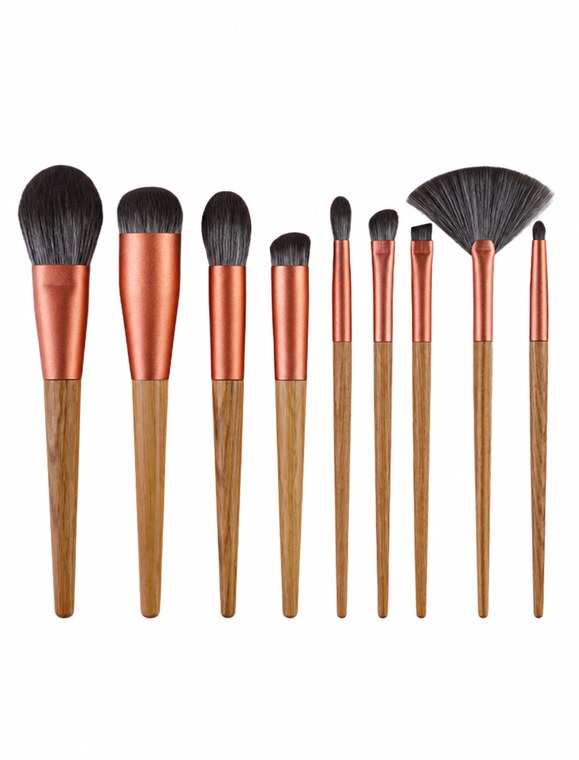
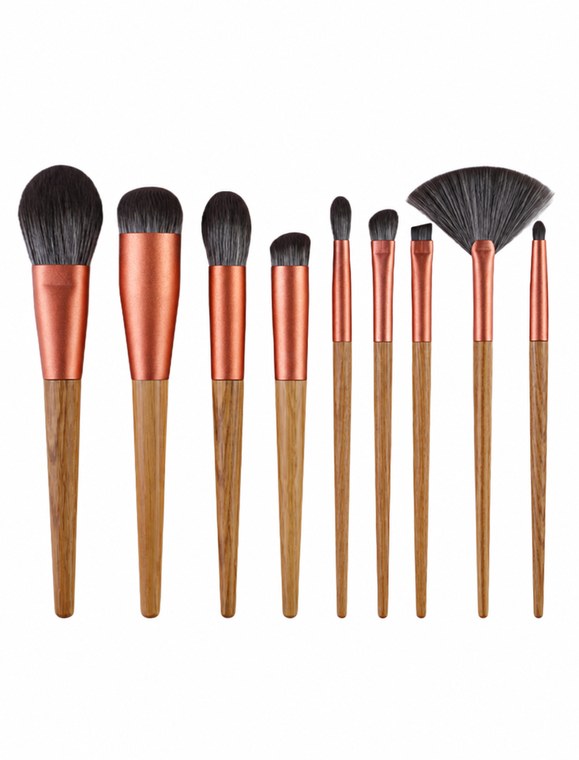
Z’OREYA’s Copper & Wood 9-Piece Full Face Set illustrates that logic. There are four face brushes, four eye brushes, and one fan brush which perform a variety of functions such as applying foundation, powder, blush, contour, highlight, eyeshadow, blend, and detail. The high density of the nylon-based synthetic fibers is perfect for liquids, creams, and powders, while the woodgrain handle and copper ferrule give a warm professional look.
What to Check in a Foundation Brush Sample
Pickup, release, streaking, and edge blending
Apply the intended formula to a clean face chart or test surface, then observe how the brush picks up, spreads, and releases product. Look for edge streaks, uneven pressure, excessive absorption, and areas that need repeated passes. Test both a light and built-up layer.
Shape recovery after cleaning
Clean the sample using the care method planned for the product. After drying, check whether the head returns to its original outline, whether fibers clump, and whether the ferrule or handle connection moves. This matters for retail products because a brush that loses its shape quickly can create complaints even when the first application feels soft.
Ferrule alignment and handle comfort
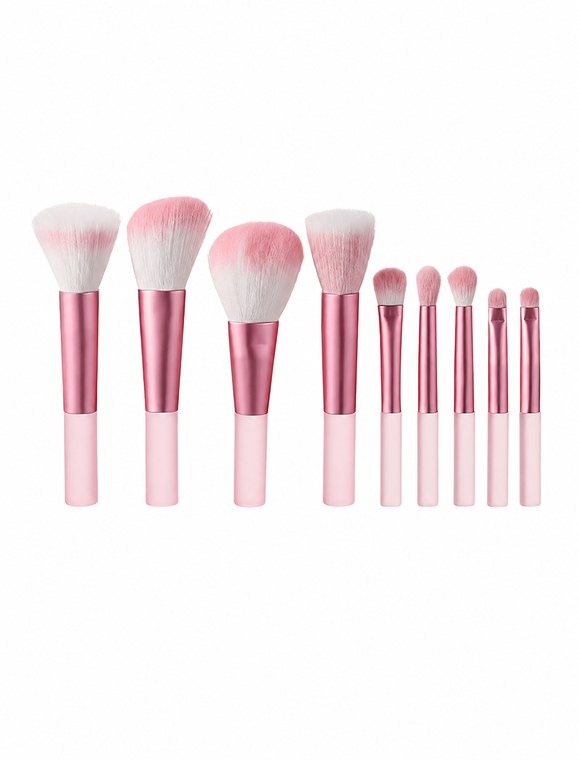
Hold the brush in the positions a user will naturally choose. Check the ferrule edge, handle grip, balance, and movement around the nose and jaw. A premium finish should support control, not distract from it. Z’OREYA’s Pink Metallic 7-Piece Set pairs Nylon/PBT synthetic fibers with a frosted plastic handle and pink-coated aluminum ferrule, showing how a coordinated visual identity can support a compact face-and-eye assortment.
How Z’OREYA Supports Different Foundation Brush Concepts
Our OEM/ODM development work can connect brush-head shape, fiber selection, handle material, ferrule finish, set configuration, logo treatment, and packaging. That makes it possible to build a single foundation brush, a small complexion capsule, or a full-face set around one application story.
Start with the target formula, desired coverage, intended finish, hand position, and channel. Then share the reference shape, dimensions, preferred fiber feel, handle direction, and set role. We can evaluate those inputs through our Service and OEM/ODM workflow and against the appropriate product family, including our Advanced Synthetic Fiber Series.
Conclusion
Foundation brush types are easier to choose when shape, density, formula, and finish are considered together. Use flat-top heads for efficient liquid application, angled profiles for targeted access, rounded or kabuki heads for buffing, and stippling shapes for lighter buildable coverage. With a clear role for each brush, Z’OREYA helps beauty brands create ranges that are easier to use, explain, and merchandise.
FAQ
Q: What type of brush is best for liquid foundation?
A: A dense flat-top or rounded foundation brush is typically a good starting point for liquid foundation as they allow an even spread of product and good coverage. Depending on the desired finish of the foundation a flatter edge will allow more controlled placement whilst a rounded head will allow more buffing of the product. It is also worth testing the specified brush with the specific product to determine if it is the most suitable for the range.
Q: Which type of brush is best for foundation?
A: Determine the correct brush by the application results, not by the brush name. A dense flat-top brush covers quickly, an angled brush paints in corners and crevices, a round brush paints in circular motions and blends. A stippling brush applies light layers of paint. A clear product line offers more than one brush when each brush serves a distinct purpose.
Q: What is the best brush for powder foundation?
A: For powder, a soft brush with sufficient density to pick up the powder and release it again is best. A rounded or kabuki shaped brush is best for applying powder to larger areas of the face, whereas a slightly smaller brush head is better for applying to the nose, under the eyes etc. The choice will depend on the powder in question and the amount of coverage required.
Q: What brush should be used for foundation?
A: Choose a brush that matches the product formula and the area of the face you’re applying product to. For instance, broad heads are great for applying product to cheeks and the forehead, whereas angled heads can reach round the sides of the nose and a small round head provides precise application. Explain the use of each brush in a set so customers can see what they’re getting without having to look at the images.
Q: Are synthetic bristles suitable for a foundation brush?
A: Yes. Synthetic fibers can be engineered to vary in softness, resilience, density and head configuration to be used for liquid, cream or powder products. The fibers offered by Z’OREYA include Nylon/PBT and others. Assess pickup, release, skin contact, cleaning and shape recovery with the relevant formula before approval.


